Showing posts with label Space. Show all posts

Monday, 13 May 2013

Experimenting

Experimenting with the idea of photochromic paints:
- how imagery appears with 'black' lights
- where to place it 


When researching photochromic/thermochromic paints, I immediately thought of this:
Glow worm caves in New Zealand or indoor star gazing.
So now I have to figure out how to use the paints:
- what colours to use
- how to eg handmade painting or printed
- figure out how "blacks" can appear whilst in normal light can be invisible
- when presenting: use a large page or "peel off" 
- when presenting: large black light or torches for interactive
- interested in thermochromic paint - added interactive elements however it changes the way "energy usage" develops or reveals the imagery.

Alicia Ingruber designed these posters about the Stitchbird in New Zealand. Its the kind of graphics works I like to do and appreciate the style. 
Now I have to figure out the actual design and decide how parts of it will glow.


Sunday, 5 May 2013

Weather

The sun is pretty much king of the power cycle. Hank Green from SciShow (also happens to run ecogeek) discusses the sun. Aside from affecting the melanin in your skin it also makes for a great energy source. However we continue to screw everything up with economics. Watch.

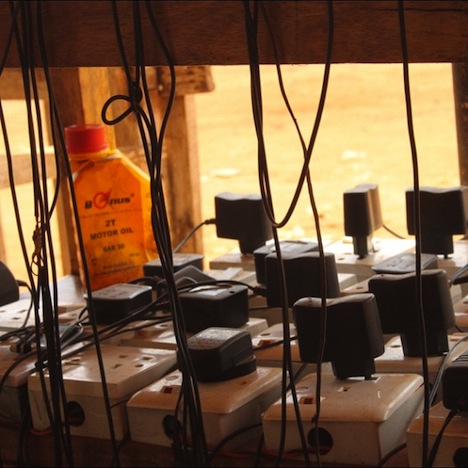
The reason I am bringing these ideas up is due to the fact that core77 had a great blog posting about Solar Panels in Rural Uganda by An Xiao Mina. I suggest you, after watching the above video, is go to the link and have a read. 
Mina looks at rural northern Uganda and their power needs and how they achieve these and problems facing these results and stuff. These posts are part of an ongoing series responding to Tricia Wang's series of posts. Ah, infinite cycles. 

The next thing! Dry Drizzle Rain Room! atmosphereatmosphereatmosphere
This is part of MoMA PS1's EXPO 1: New York exhibition. It is "a large-scale festival exploring ecological challenges". The installation is a 100square metre space of falling water. Yes, indoor rain. It responds to your movements and "presence" and lets you walk through it without getting wet. It was created by rAndom international. 
If it was me, I would program the installation to "act up" every now and then. JUST BECAUSE I COULD. So why am I showing you this? Other than its pure awesomeness, it relies on a sense of atmosphere. And they do this through weather....Or abstract weather. The idea of weather. Not only is the actual project beautiful, the media surrounding it is poetic and strangely similar to concept design. 
Turns out the project was found here, a blog written by Vincent Di Maggio. He has a better engaging style of writing and better knowledge. But he didnt have a video to link. So both blogs get referenced. The only thing I have to question is the sustainability factor....Where is this rain obtained from? Where is it going? How about the values and materials used? Nevertheless, I want to go and experience it.


Friday, 12 April 2013

Ground Control

Trekked it into the Glue Studio today to have a chat with James Dive! It was really interesting getting information from a practicing creator outside of uni. And I spent more time talking about my project with one stranger, than the combined time spent with both tutors over the last 5 weeks (giant class sizes are to blame). I now know what it feels like being a tween-girl watching twilight....What a dork. Next stage is compressing the ridiculously long brief cofa assigned and busting out some more research. 

Dive mentioned Storm Glasses that "detected"...storms. There were sealed containers with distilled water and chemicals. (This was thought of due to the narrowed down idea of "creating atmospheres to demonstrate energy usage" and responsive objects/installations).

And now some new designs:
Storm Glass, Craig Borum, 2011
Tempo Drop, Perrocaliente

Scientists still don't understand exactly the way it works, however theories include temperature changes, electromagnetic changes and particles quantum tunnelling through the glass. They're a great example of objects that react to the environment which is kinda cool. 

Nasa releases time lapse videos every now and then and proves just how insignificant we all are. It brings into sharp contrast our inflated opinions of the human race (just because we have opposable thumbs). That and atmosphere. 


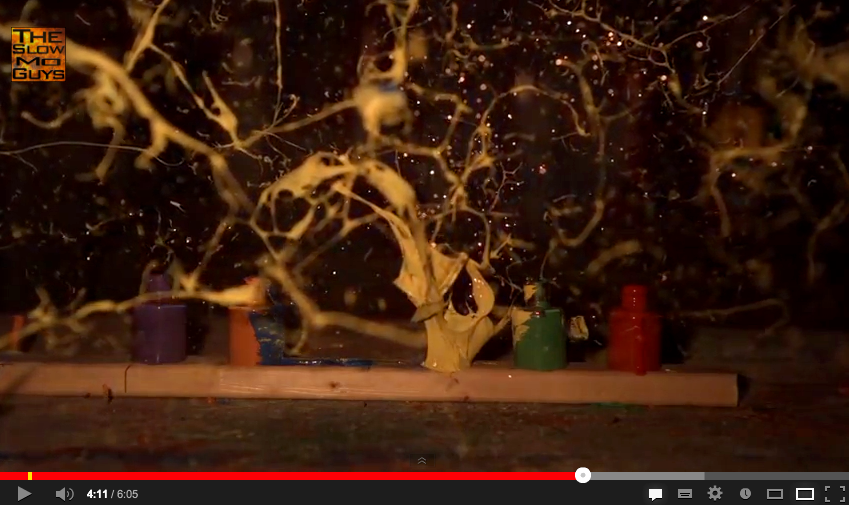
And then the slow-mo guys uploaded a video of paint exploding at 15000fps! Once paused the images give the same impression. Now imagine that as an object! A bit off track but scale it up a bit and have the lights pulse BOOM!


atmosphere atmosphere atmosphere atmosphere atmosphere atmosphere atmosphere atmosphere atmosphere

Tuesday, 2 April 2013

Ice Caves

Came across these images of Skatftafelafaljcbadkglsabgra, Southeast Iceland. BAM and BAM


So besides an addition to a bucket list, these caves look amazing. And remind me of my project a bit. They have characteristics I think I will employ in the final. Bubbly-transparency-coloury-lighty-reflectiony type characteristics. Whatever. They look cool. No pun intended. Thanks to Christian Klepp and some other person who took the second photo.

Friday, 22 March 2013

Rafael Lozano-Hemmer

Rafael Lozano-Hemmer is a Canadian based artist that does crazy installations with lights and tech. A ton of his work creates unreal spaces that relies on audience interaction. Usually this type of thing annoys the crap out of me aka 'Vivid Sydney', however I think the scale at which these singular installations are developed, their adaption to locations and their active relationship with the public is intriguing. 


Pulse Room, 2009, Denmark: basically it records your pulse and reflects it through a ceiling of hanging lights. I've never seen it other than online, but I imagine it would be an unusual/awe-inspiring atmospheric experience. I would probably be the kid jumping up and down. 


At 3:25 Anne Sophie Warberg Lossing, Curator, Enter Action - Digital Art Now, has a quick chat.
"It captures, very nicely, the way technology invades our lives and I think it does it in a very poetic way umm...so it's not like those cold, in-humane technologies, but it's really touching, and it steals something from us that is really personal, so it's also a participatory work I guess...so it touches something very specific about the age we live in."

I jumped on Lozano-Hemmer's site and here is what I found out:
- It was inspired by a 1960 film Macario, where the protagonist suffers a hunger-induced hallucination in which every person is represented by a lit candle in a cave.
- Other references include minimalist, mechanic and serialist patterns in music and the theory of Cybernetics to explain the process of self-regulation of the heart.

Pulse Park, Madison Square Park: a combination of lights that are modulated by sensors that records heart rates of participants. The rhythms are lit up like that in the Pulse Room and move down a light when more are added. 


Sunday, 3 March 2013

Space

With complements to Google Maps: Im trying to figure out A: where to place this zooper dooper apartment/smart structure and B: the view to possibly create a destroyed-by-global-warming world. 


The idea as of yet is to create visual/tangible energy/waste/water in the home. You should be able to see the amount used, in comparison and effects - it should become inbedded into human action/thought. 

So how to display it? This short, made by the kids at mgfxstudio rocked out a hyper-reality concept. Very Iron Man-esque.


Another future structure-integrated with "Photovoltaic Glass"concept. Interaction overload or sensory info-design? Is this the direction I want to move in?