Showing posts with label Star-trekky. Show all posts

Friday, 29 November 2013

Smokos Without the Smoke

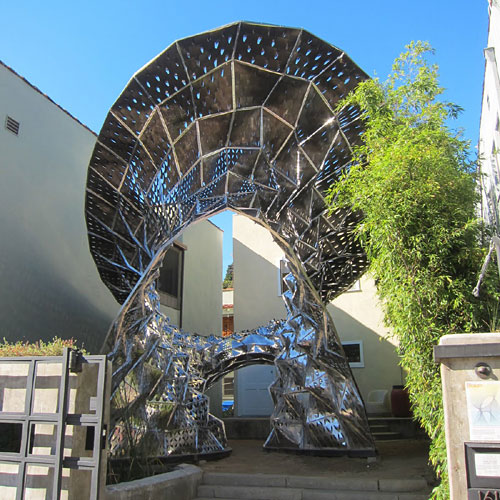
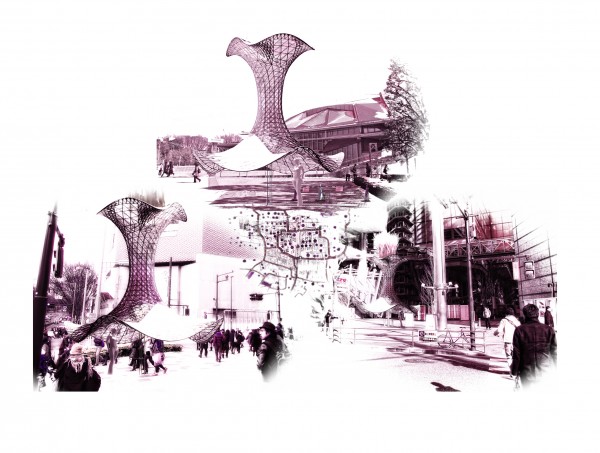
Perpetuum Mobile is a reason to get some fresh air. Developed by O+R the outdoor funnels facilitate smokers and non-smokers to share the air. 
As an allergy-prone-belong-in-a-bubble type of person I am all for this. At the moment it is envisioned for Tokyo city, but if it wants to settle in Sydney, I'm all for it. More info at evolo. 


Monday, 13 May 2013

Experimenting

Experimenting with the idea of photochromic paints:
- how imagery appears with 'black' lights
- where to place it 


When researching photochromic/thermochromic paints, I immediately thought of this:
Glow worm caves in New Zealand or indoor star gazing.
So now I have to figure out how to use the paints:
- what colours to use
- how to eg handmade painting or printed
- figure out how "blacks" can appear whilst in normal light can be invisible
- when presenting: use a large page or "peel off" 
- when presenting: large black light or torches for interactive
- interested in thermochromic paint - added interactive elements however it changes the way "energy usage" develops or reveals the imagery.

Alicia Ingruber designed these posters about the Stitchbird in New Zealand. Its the kind of graphics works I like to do and appreciate the style. 
Now I have to figure out the actual design and decide how parts of it will glow.


Sunday, 5 May 2013

Weather

The sun is pretty much king of the power cycle. Hank Green from SciShow (also happens to run ecogeek) discusses the sun. Aside from affecting the melanin in your skin it also makes for a great energy source. However we continue to screw everything up with economics. Watch.

The reason I am bringing these ideas up is due to the fact that core77 had a great blog posting about Solar Panels in Rural Uganda by An Xiao Mina. I suggest you, after watching the above video, is go to the link and have a read. 
Mina looks at rural northern Uganda and their power needs and how they achieve these and problems facing these results and stuff. These posts are part of an ongoing series responding to Tricia Wang's series of posts. Ah, infinite cycles. 

The next thing! Dry Drizzle Rain Room! atmosphereatmosphereatmosphere
This is part of MoMA PS1's EXPO 1: New York exhibition. It is "a large-scale festival exploring ecological challenges". The installation is a 100square metre space of falling water. Yes, indoor rain. It responds to your movements and "presence" and lets you walk through it without getting wet. It was created by rAndom international. 
If it was me, I would program the installation to "act up" every now and then. JUST BECAUSE I COULD. So why am I showing you this? Other than its pure awesomeness, it relies on a sense of atmosphere. And they do this through weather....Or abstract weather. The idea of weather. Not only is the actual project beautiful, the media surrounding it is poetic and strangely similar to concept design. 
Turns out the project was found here, a blog written by Vincent Di Maggio. He has a better engaging style of writing and better knowledge. But he didnt have a video to link. So both blogs get referenced. The only thing I have to question is the sustainability factor....Where is this rain obtained from? Where is it going? How about the values and materials used? Nevertheless, I want to go and experience it.


Saturday, 4 May 2013

Whoops

The last post was a bit of an overreaction. A massive overreaction. The kind of reaction you get when you put a mentos into a coke bottle. Turns out I had Richard and Karina. And I scared the crap out of them with my research and enthusiasm. I was feeling a little lack-luster after so I took a day and jumped onto evolo and found some random inspiration. 


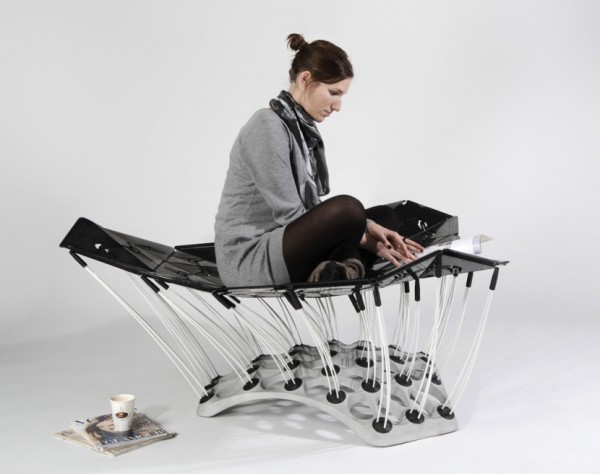
ChairBedStool
Design & Construction by Thoman Hiemann and Markus Dilger
Creates in the project group ID5, UdK Berlin with Prof. Burkhard Schmitz (no relation) and Katina Sostmann. 
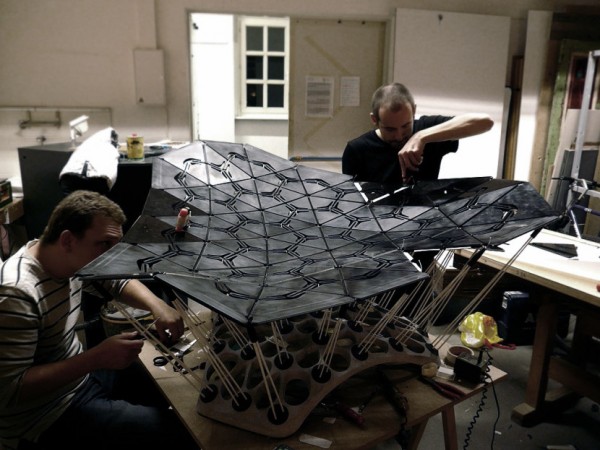
I think, from the evolo page, that it was about "permanent adaption of the surface to the human body." By itself, the object looks like a reincarnated medieval torture device, due to its plastic clusters and elastic rods and geometric patterning and rigid segments and whatnot. BUT IT IS FREAKING AWESOME. It reacts to body movement and alters perceptions (or at least my perceptions) of static or stationary furniture. 
Im not entirely sure why this project is so interesting. Its a bit star-trekky. I want to see it in a long expansive structure. Adult trampoline.


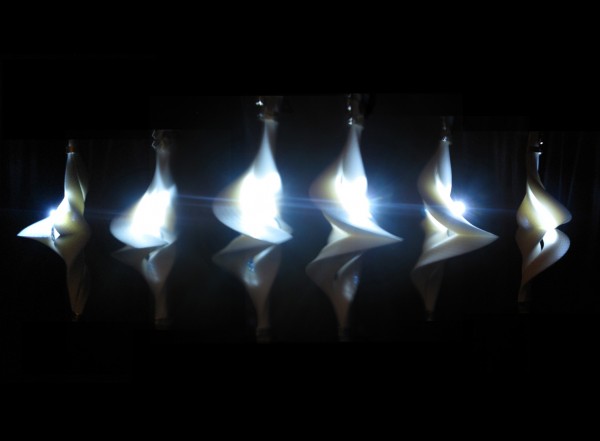
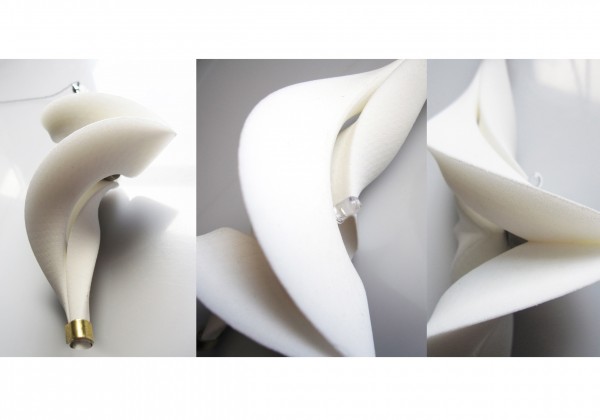
Designed by Dr. Margot Krasojević, the 3D printed nylon polymer lamp is suspended by a spindle. Its weight and form dictate the momentum as it spins which is affected by minor environmental change eg temp and current, all which change light patterns. Then there are some rather interesting words which talk about technology and physics. What I can decipher is that the light has been influenced by the physics behind ice skaters and spinning tops.
I think they are so interesting due to their convergence over a number of disciplines. To me they could represent energy efficiency, organic structure systems, dance, sea life, new forms of technologies, the combination of physics and design for interiors, art, etc etc. Maybe its ambiguity is what is intriguing to me. Without information on the product and no real conventions to rely on, its hardly a known object. Yep. It could be anything. I like that idea most of all.


USC architect Prof. Doris Kim Sung design this "Bloom" installation made of 14,000 pieces of thermobimetal. That is, two thin sheets of metal with different expansion rates laminated together. The metal reacts to temperature with a direct correlation to the sun. I dont find the structure nearly as impressive as the technology itself. Metal that moves. Paradox!


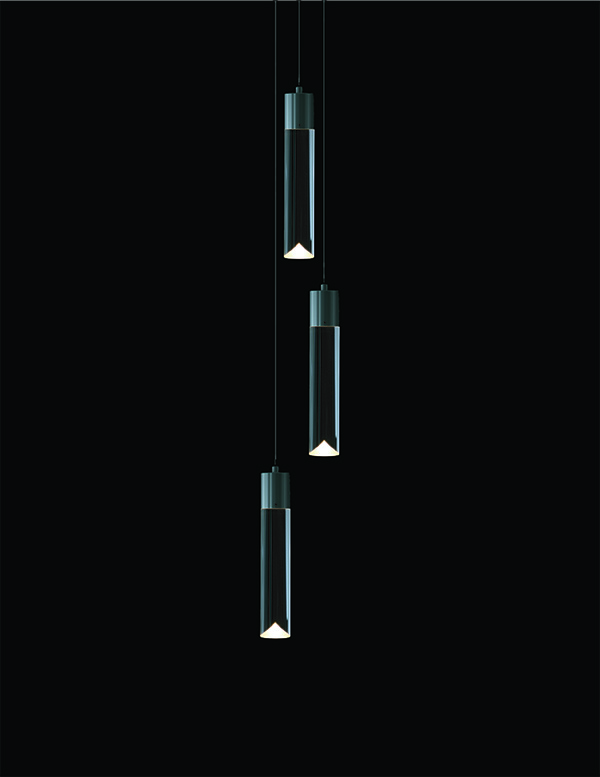
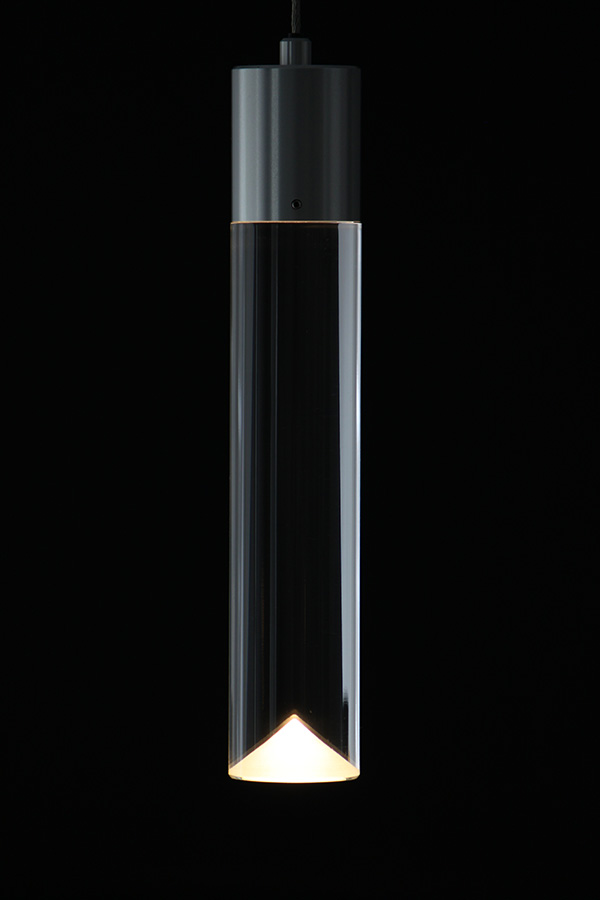
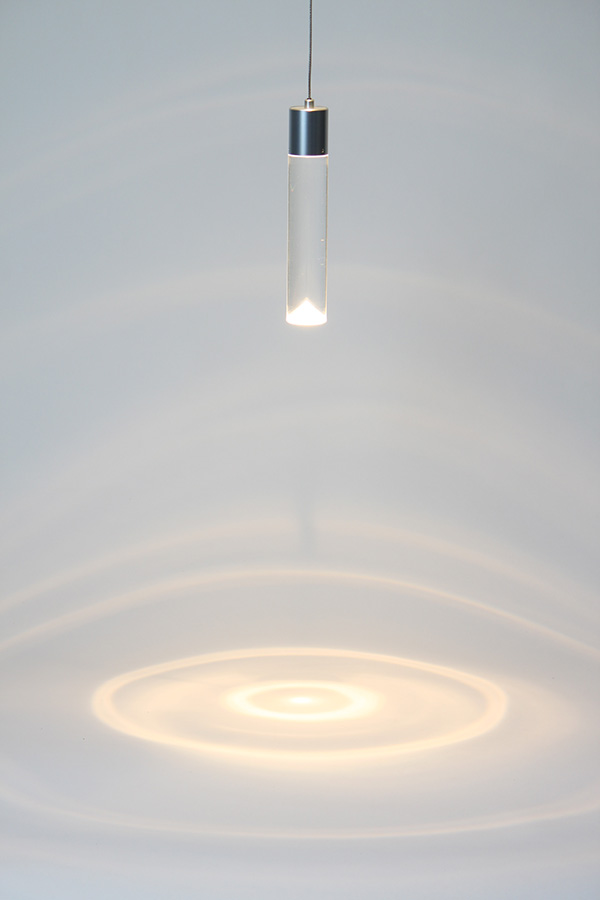
Saleem Khattak designed this energy efficient LED lighting, a luminaire that evokes the best qualities of incandescent lights: warmth, comfort and intimacy. Diffusers and cylindrical casing stops the glare from a visible light source. This is a perfect example of subtle complexity pwning overtly complex systems. I WANT ONE. Or a bunch. Put me down for a bunch. They have invert candle like qualities, in LED form.


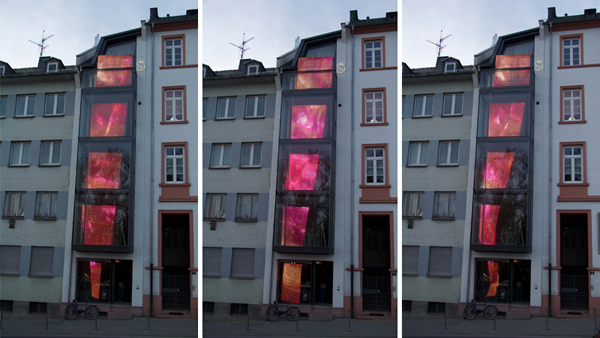
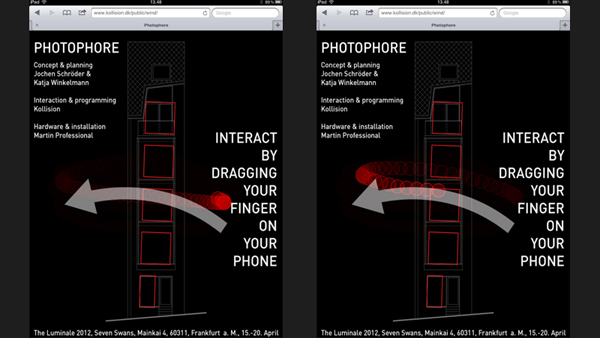
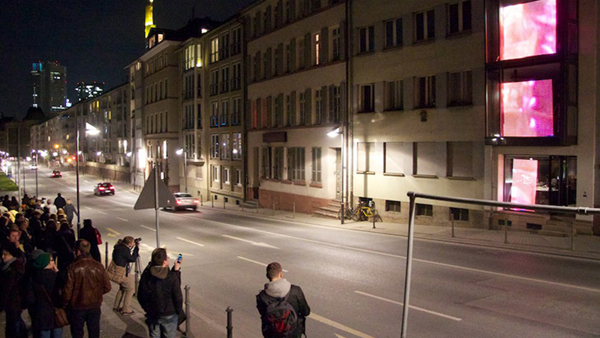
A 3D responsive veil operated by a smart phone. Designed for the Luminale 2012 in Germany, Kollision installation is a 5 story veil of light. People are able to scan those stupid QR codes into their phones and swipe the installation to the side. Jochen Schroder & Katja Winkelmann who planned the project along with Martin Professional (hardware & installation) and Kollision who developed the interaction & programmed the interactive player. They used photoshop software built in C++ and Cinder library to create the real-time 3D responsive wall. A website was built to assist the interaction.


I really like works that invite the audience to participate, engage and direct the result in some way. They provide a realisation of the audiences' affect on design and prove that the works are acknowledged on various levels of understanding. 
Saturday, 16 March 2013

Monitoring..Some more.

Im going to bash through a bunch of stuff real quick!

thegreenergrass has posted a couple great ideas when it comes to understanding power:

Power Conscience concept by Delroy Dennisur

The Home Joule by Ambient

EDF Energy Saving Adaptor

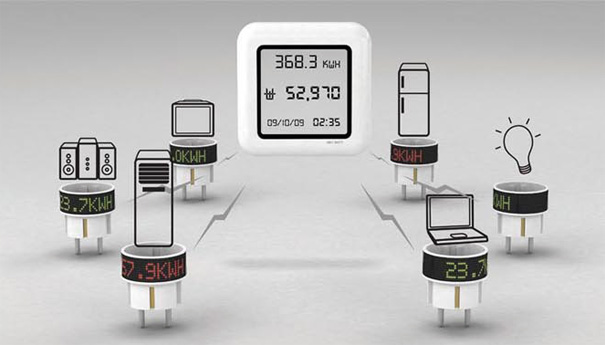
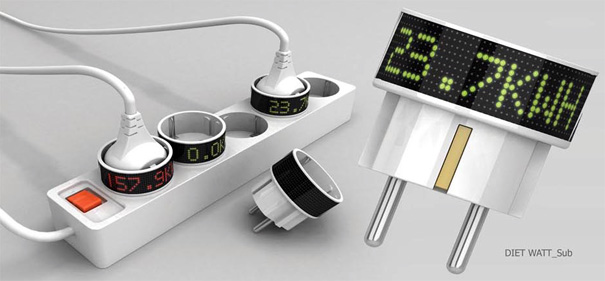
The Diet Watt System: yankodesign 


Now. It seems a little stupid to use energy to show energy usage. But how else are we to?

Power

Quirky have a nifty project on their hands. They've been observing how we utilise power points and are designing Pickup Power. While portable power has been around since we figured out how to make fire from sticks, this a "tabletop power strip that houses stationary, portable and usb power in a single beautifully designed unit."
Find it here: quirky


It uses little light dots to represent how much power is left. Who decided this was the way technology should present power levels? 


Duracell Powermat has bashed out this sleek ad about their product ... Powermat. They've got fancy tech to make portable wireless power. I did like the presentation, though it does feel a bit "too cool." Watch. Now. Go!


Though you need the cases and there is an extra charger thingy, I really like the automatic switch off when a product has charged fully!


Here is another techy wireless power charger that uses magnetic induction. No wires. No cases. No chargers. It would make things easier!


Glo Nightlight

Glo Nightlights are marketed for kids. However I want one. Still with the concept of tangible/visual energy, these lights are exact representations of the idea. They change colour and have a goofy low-energy LED base with 9 volt power adapter. The balls glow for 30mins off the charger and dont have electronics in them...so perfectly safe for children. How they work, I still have no idea.
You can buy it here: booninc


This guy, David Di Franco, has a fun vid about unpacking and trying out the Glo Nightlight. And good on him for buying a kid's lamp. 


Thursday, 14 March 2013

E-Inkey Keyboard Concept

In the general wanderings of the day, I fell across this concept keyboard from designers Maxim Mezentsey & Aleksander Suhih. This clever concept removes the need for keyboard covers with coloured keys and tiny icons as its built right into the technology. Its an excellent example of attacking a problem at the start of the cycle rather than at the end of design.


Able to switch between programs, the wireless keyboard for Macs, suits the muti-tasker and really just rocks as an idea. Just a concept at the mo. but I would definitely be up for grabbing myself one of these!

Tuesday, 5 March 2013

OLED

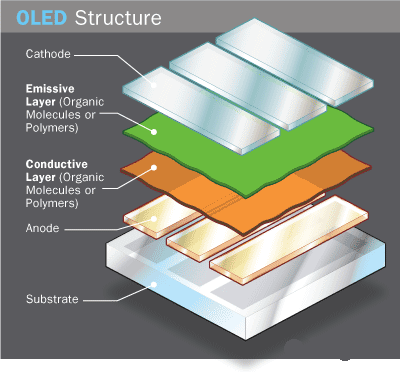
Stands for Organic Light-Emitting Diode. It is a not-so-new technology that creates digital displays ie phones, tvs, computer screens, portable games etc. It doesnt require a backlight which means (big, Huge selling point here) it is thinner and lighter than the usual liquid crystal display (LCD). It also has killer contrast, colour, can be 3D and keeps up with fast film/sport rates. 

I cant wrap my head around the techy part of it but generally this is the gist - 

There are a bunch OLEDs:

Active Matrix OLED (AMOLED)
- High res, large size
- Anode layers include a Thin-Film transistor (TFT) plane to form a  matrix
- Quick refresh rate
Passive Matrix OLED (PMOLED)
- Small screen devices
- Strips of anode and cathode
Inverted OLED
- Bottom cathode
- Low cost OLED
Foldable OLED
- Used in devices that are more likely to break
- Flexible, durable, lightweight
- Connected to clothes, foils, plastics
Top Emitting OLED
- Transistor backplane, not transparent
- Suited to matrix applications like smart cards
Transparent OLED
- Good contrast
- Anode, cathode and substrate are transparent
White OLED
- Brightest light
- Manufactured in large sheets - Cost effective and consume less powerStacked OLED- Uses composite colours- Reduction in pixel gap and increase in colour depth- Used most in Tvs

For more info: circuitstoday


There are a bunch of "future" uses, but the guys at Osram see this technology becoming integrated into our homes through luminescent window glass, reflective surfaces like mirrors, tiles or entire flat planes/surfaces etc.

For more info: osram